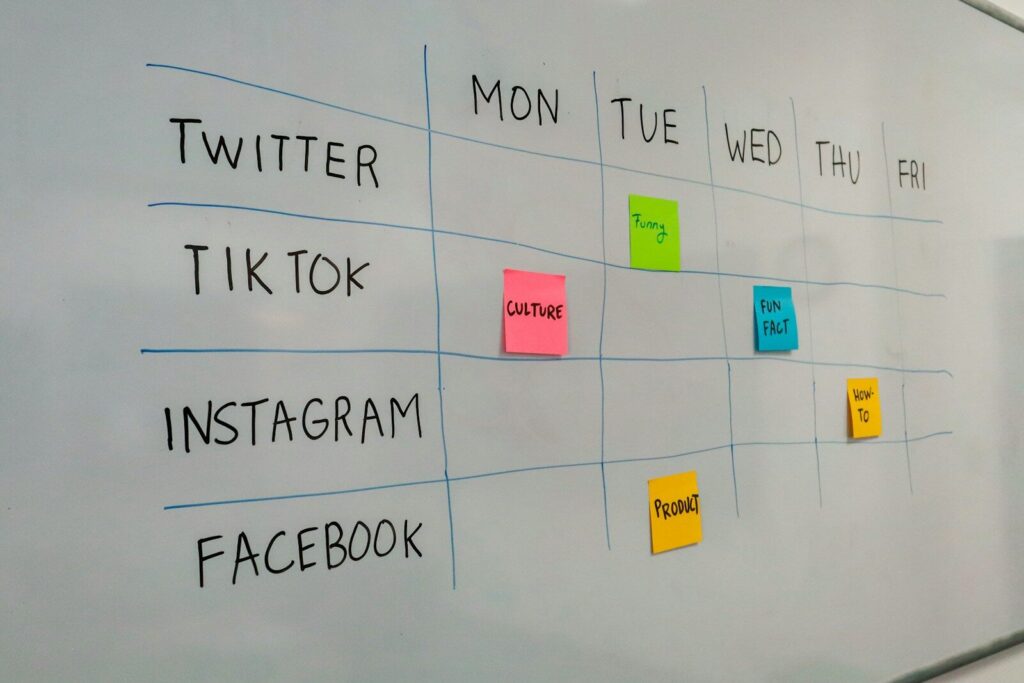
Social media management changed completely.
Most businesses still think AI means generating captions with ChatGPT and scheduling them inside Buffer. That is already outdated.
In 2026, the real advantage comes from autonomous social media systems.
The brands growing fastest are no longer managing content manually. They are building AI-driven operational pipelines that handle:
- Content ideation
- Post generation
- Cross-platform adaptation
- Scheduling
- Community management
- Social listening
- Engagement triage
- Reporting
- Trend monitoring
almost automatically.
This is the new era of Social Media AI.
And if your workflow still depends on manually writing captions and dragging posts into calendars, you are competing against systems moving 10x faster.
The smartest move is integrating AI directly into your broader social media marketing strategies. Social media should not operate independently anymore. It should connect with your:
- SEO strategy
- Email marketing
- Content operations
- Customer support
- Brand positioning
- Revenue campaigns
That is where AI becomes truly powerful.
This guide breaks down how modern AI social media systems actually work, which tools matter, what workflows scale, and how businesses are building fully automated social media engines without bloated teams.
Scheduling Tools to Autonomous Social Media AI
Traditional social media tools were built for scheduling.
That was enough when content velocity was slower.
Not anymore.
Modern platforms now prioritize:
- Real-time adaptation
- Behavioral analysis
- AI-assisted engagement
- Automated repurposing
- Dynamic audience targeting
- Cross-platform optimization
The old workflow looked like this:
- Create content manually
- Resize graphics
- Rewrite captions
- Schedule posts
- Monitor comments
- Build reports manually
The new AI-driven workflow looks completely different:
- AI identifies trending topics
- AI generates content variations
- AI adapts messaging per platform
- AI schedules based on engagement windows
- AI triages comments and DMs
- AI monitors sentiment
- AI surfaces optimization insights automatically
That operational shift is massive.
Especially for:
- Agencies
- Ecommerce brands
- Personal brands
- SaaS companies
- Publishers
- Coaches
- Media businesses
The biggest advantage is not just speed.
It is operational consistency.
What is Social Media AI Actually Doing?
Most people misunderstand AI social media tools.
They think AI simply writes captions.
Modern systems go much deeper.
A proper AI social media manager can coordinate:
| Function | AI Capability |
|---|---|
| Content Research | Trend discovery and topic clustering |
| Copywriting | Platform-specific caption generation |
| Design | AI image generation and branding |
| Publishing | Automated scheduling |
| Engagement | DM and comment triage |
| Analytics | Sentiment analysis and reporting |
| Repurposing | Multi-format content conversion |
| Listening | Monitoring brand mentions and competitors |
That means AI is no longer just helping create content.
It is managing operational workflows.
Why Manual Social Media Workflows Are Breaking Down
The volume expectations are too high now.
Modern brands must create:
- Short-form video
- Threads
- Carousels
- Stories
- Reels
- LinkedIn posts
- Community engagement
- Real-time trend responses
across multiple platforms simultaneously.
Doing that manually creates bottlenecks everywhere.
Especially when teams also manage:
- SEO
- Ads
- Email campaigns
- Client communication
- Ecommerce operations
This is why businesses are shifting toward AI-assisted execution layers.
Not because AI is trendy.
Because manual workflows no longer scale efficiently.
The Modern AI Social Media Stack
One mistake businesses make is stacking random AI tools together without structure.
You do not need 12 overlapping platforms.
You need a focused operational stack.
The smartest approach is separating your system into three layers:
- Content Creation
- Automation & Distribution
- Analytics & Optimization
That structure keeps workflows clean and scalable.
Layer 1: AI Content Creation Systems
This layer handles:
- Caption generation
- Graphics
- Video assets
- Content adaptation
- Brand consistency
These tools dramatically reduce production time.
Canva AI
Canva evolved far beyond templates.
Its AI ecosystem now supports:
- Magic Write
- AI image generation
- Instant resizing
- Brand kit automation
- Presentation generation
- Video editing
- Background removal
For visual-first brands, Canva remains one of the most efficient creative systems available.
Especially for:
- Agencies
- Ecommerce brands
- Coaches
- Creators
The biggest advantage is speed.
Teams can generate large amounts of branded visual content without needing advanced design skills.
Predis.ai
Predis.ai focuses heavily on automated post generation.
Instead of manually combining:
- Graphics
- Captions
- Hashtags
- Video snippets
the platform generates them together from a single prompt.
That makes it extremely useful for:
- Small businesses
- Solo founders
- Lean marketing teams
It is particularly strong for quick-turnaround social content pipelines.
Buffer AI Assistant
Buffer’s AI layer excels at platform adaptation.
One of the biggest mistakes brands make is posting identical content everywhere.
That kills engagement.
Buffer helps rewrite content for platform-native behavior.
Example:
A LinkedIn post becomes:
- Professional and insight-driven
An X post becomes:
- Short and hook-heavy
An Instagram caption becomes:
- More conversational and visual
This matters because every platform rewards different communication styles.
Layer 2: Autonomous AI Publishing and Engagement Systems
This is where AI becomes operationally powerful.
Instead of simply generating content, these systems actively manage publishing workflows and engagement loops.
Ocoya
Ocoya focuses heavily on automation.
Its workflow engine can connect:
- Ecommerce systems
- RSS feeds
- Product launches
- Content pipelines
- Publishing schedules
That means content can move from source to publication automatically.
Example workflow:
- New blog post published
- AI extracts summary
- AI generates captions
- AI creates visuals
- AI schedules multi-platform distribution
with minimal manual input.
That compression saves massive amounts of time.
Eclincher
Eclincher focuses heavily on engagement automation.
This becomes extremely valuable at scale.
Instead of manually checking every:
- Comment
- Mention
- Direct message
AI agents can categorize interactions automatically.
Example:
| Message Type | AI Action |
|---|---|
| Common FAQ | Auto-response |
| Customer complaint | Escalate to human |
| Sales inquiry | Prioritize |
| Spam | Filter automatically |
This dramatically improves response management for larger brands.
FeedHive
FeedHive specializes in content recycling.
Most brands underutilize their existing content library.
FeedHive identifies:
- High-performing posts
- Evergreen content
- Engagement spikes
- Viral structures
and intelligently republishes optimized variations.
That extends content lifespan significantly.
Layer 3: AI Analytics and Social Listening
This layer separates advanced brands from average brands.
Because content alone is not enough anymore.
The real advantage comes from extracting behavioral intelligence.
Sprout Social
Sprout Social remains one of the strongest enterprise-grade social listening platforms.
Its AI systems analyze:
- Brand mentions
- Sentiment patterns
- Customer frustration signals
- Competitor conversations
- Industry trend spikes
in real time.
This helps businesses identify:
- Emerging pain points
- Product opportunities
- Reputation risks
- Market sentiment shifts
before competitors react.
ContentStudio
ContentStudio focuses more heavily on competitive intelligence and topic discovery.
Its monitoring systems track:
- Competitor publishing activity
- Trending subjects
- Content velocity
- Engagement surges
This is especially valuable for:
- Content marketers
- Publishers
- Agencies
- Personal brands
because it helps identify trend momentum early.
How Autonomous Social Media Workflows Actually Work
Most businesses understand AI tools individually.
Few understand how to connect them operationally.
That is where the real advantage exists.
An autonomous workflow links:
- Content sources
- AI generation systems
- Approval pipelines
- Publishing engines
- Analytics feedback loops
into one operational system.
The Core Workflow Structure
A scalable AI social media workflow usually follows this pattern:
| Stage | Function |
|---|---|
| Ingestion | Detect new content or trigger |
| Generation | Create platform-specific assets |
| Adaptation | Customize per platform |
| Approval | Human review stage |
| Publishing | Queue and distribute |
| Monitoring | Track engagement |
| Optimization | Feed performance back into system |
This creates continuous operational feedback loops.
Content Ingestion Systems
Every workflow needs a trigger source.
This can be:
- A blog post
- YouTube upload
- Podcast episode
- Product launch
- RSS feed
- Ecommerce update
- Google Sheet entry
The system detects the trigger automatically.
Then passes the data into the AI pipeline.
Example:
A new blog article gets published.
The workflow instantly:
- Extracts key points
- Generates summaries
- Creates post variations
- Generates graphics
- Schedules distribution
without requiring manual coordination.
AI Multi-Platform Adaptation
This is where AI dramatically outperforms traditional scheduling.
Cross-posting identical content is lazy marketing.
Each platform behaves differently.
AI systems can adapt:
| Platform | Preferred Style |
|---|---|
| Insight-driven | |
| X | Hook-heavy and concise |
| Visual and emotional | |
| Conversational | |
| TikTok | Entertainment-first |
Modern AI systems rewrite messaging automatically for each environment.
That massively improves engagement quality.
Human-in-the-Loop Approval Systems
Fully autonomous publishing sounds exciting.
It is also dangerous.
Especially for brands.
AI still makes mistakes.
That is why approval systems matter.
The best workflows include:
- Draft review stages
- Slack approvals
- Internal dashboards
- Revision checkpoints
- Escalation rules
before publishing occurs.
This protects:
- Brand voice
- Legal compliance
- Campaign consistency
- Reputation management
The smartest companies automate aggressively while still keeping human oversight.
AI Comment Management and Community Operations
Community management is becoming one of the most valuable AI applications.
Because engagement volume becomes overwhelming quickly.
Especially for brands scaling aggressively.
AI engagement systems can:
- Categorize comments
- Detect sentiment
- Prioritize leads
- Identify complaints
- Escalate urgent messages
- Auto-answer repetitive questions
That reduces operational load dramatically.
AI Sentiment Analysis is Becoming a Competitive Weapon
Most brands only track vanity metrics:
- Likes
- Shares
- Follower counts
That data is shallow.
Sentiment analysis goes deeper.
Modern AI systems can identify:
- Frustration trends
- Brand perception shifts
- Customer objections
- Feature requests
- Emotional reactions
across huge volumes of social conversations.
That intelligence becomes incredibly valuable for:
- Product development
- Positioning
- Customer support
- Campaign optimization
The Rise of AI Video Social Media Workflows
Short-form video now dominates social distribution.
But traditional video production is slow.
AI video generation is changing that rapidly.
Modern systems can generate:
- Short clips
- Caption overlays
- AI voiceovers
- Motion graphics
- Highlight reels
- Repurposed snippets
from existing text or long-form content.
This massively lowers production barriers.
Especially for creators and ecommerce brands.
The Best Free AI Tools for Social Media
You do not need enterprise budgets to start using AI operationally.
Several free-tier tools are surprisingly capable.
Buffer Free Plan
Useful for:
- Small businesses
- Freelancers
- Creators
Supports:
- Basic scheduling
- AI caption assistance
- Multiple channels
Canva Free Tier
Excellent for:
- AI-assisted graphics
- Templates
- Basic video editing
- Brand consistency
Still one of the best free visual systems available.
Publer
Publer offers surprisingly strong free scheduling functionality.
Useful for:
- Multi-platform posting
- AI caption generation
- Queue management
Especially for early-stage brands.
Traditional Social Media vs AI-Agent Systems
The operational difference becomes obvious when compared directly.
| Operational Task | Traditional Workflow | AI-Agent Workflow |
|---|---|---|
| Content Research | Manual trend searching | AI-driven trend detection |
| Copywriting | Manual writing | AI-assisted generation |
| Design | Custom manual creation | AI-generated assets |
| Scheduling | Manual queue building | Automated publishing |
| Community Mgmt | Human-only responses | AI-assisted triage |
| Reporting | Spreadsheet compilation | Automated analytics |
| Optimization | Delayed insights | Real-time adjustments |
| Repurposing | Manual adaptation | AI-driven conversion |
The scalability gap is enormous.
The Biggest Mistake Businesses Make With Social Media AI
Most companies try to replace strategy with AI.
That fails quickly.
AI is not a substitute for:
- Positioning
- Brand clarity
- Audience understanding
- Product quality
- Messaging strategy
AI amplifies systems.
If the underlying strategy is weak, AI simply accelerates weak execution.
The businesses winning with AI are combining:
- Strong positioning
- Clear brand identity
- Human oversight
- AI operational leverage
together.
That combination is extremely powerful.
Where Social Media AI is Heading Next
The next phase is not just AI-generated content.
It is fully operational AI marketing ecosystems.
Systems will increasingly coordinate:
- Social media
- Email marketing
- SEO
- Ecommerce
- Customer support
- Analytics
- CRM systems
inside unified automation layers.
The brands adapting early will operate with dramatically higher efficiency.
Especially compared to competitors still dependent on fragmented manual workflows.
Social Media AI is no longer experimental.
It is becoming core infrastructure for modern marketing operations.
The shift is bigger than scheduling tools.
We are moving toward autonomous marketing systems capable of:
- Generating content
- Distributing campaigns
- Managing engagement
- Monitoring sentiment
- Optimizing performance
- Scaling multi-platform operations
with minimal manual overhead.
The biggest opportunity right now is not replacing marketers.
It is removing operational friction so marketers can focus on:
- Strategy
- Creativity
- Positioning
- Brand growth
- Revenue systems
The companies building AI-assisted workflows today will almost certainly outperform businesses still relying entirely on manual social media execution over the next several years.